

“Rehab duration” is the total time someone spends in structured addiction care, from medically supervised withdrawal through therapy and coordinated aftercare. Knowing typical timelines helps you and your family set realistic expectations, arrange logistics, and choose between shorter stabilization programs or longer, skills-based care.
This guide outlines the most common program lengths (30-, 60-, and 90-day programs, plus extended care), compares inpatient and outpatient timeframes, explains the clinical and practical factors that influence length, and summarizes why longer treatment often leads to stronger outcomes.
You’ll find typical weekly goals for each program length, how levels of care differ, and the signs clinicians use to recommend more time, with practical guidance to help you prepare for assessment, admission, and aftercare decisions.
What Are Common Rehab Program Lengths?
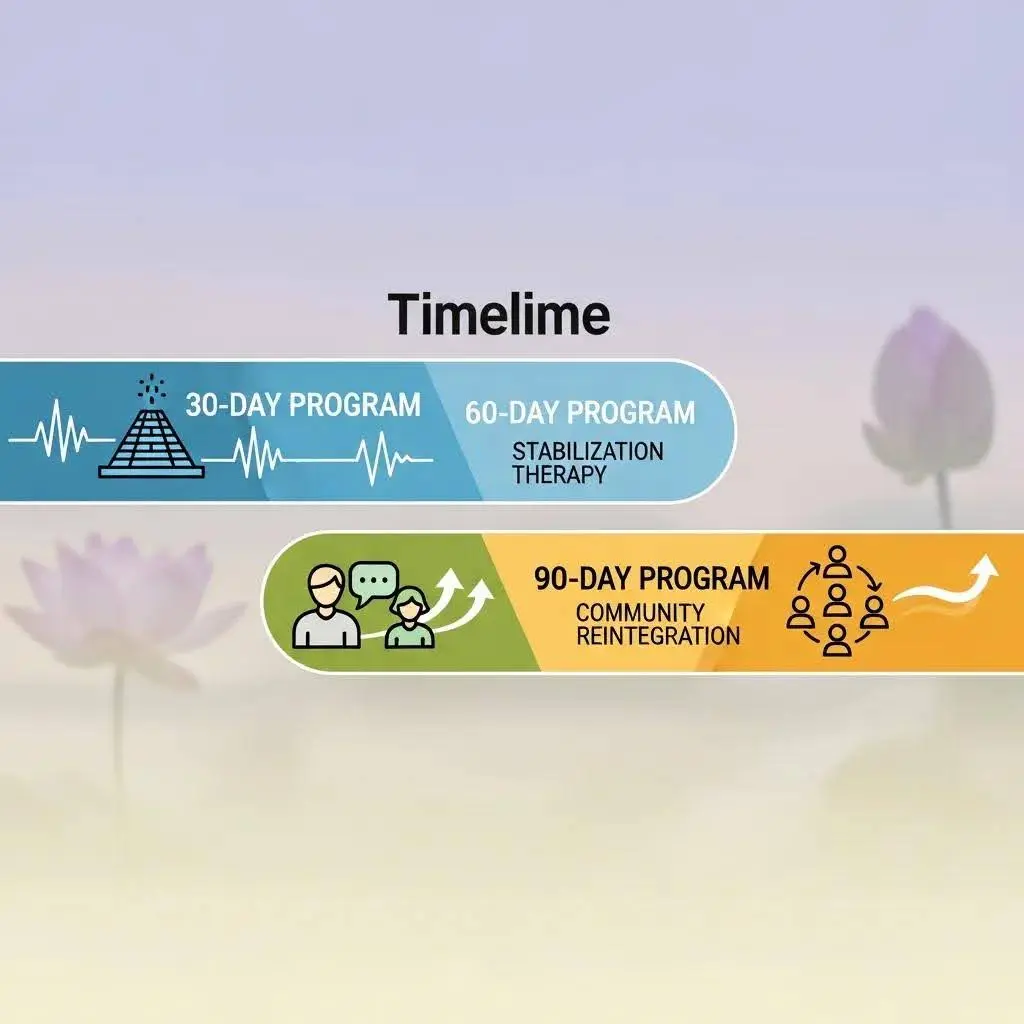
Treatment programs are typically offered in standard timeframes: 30-day, 60-day, 90-day, and extended care. 1 Each duration focuses on different clinical goals: short-term stabilization and education, intermediate skill-building and therapy, or longer-term behavior change and relapse prevention.
The best choice depends on factors such as severity of dependence, withdrawal risk, co-occurring conditions, and past treatment response. The table below summarizes each program length, its typical focus, and a compact duration label for quick reference. Each program length emphasizes specific clinical goals, so care matches the person’s needs.
| Program Length | Typical Focus / Goals | Typical Duration |
|---|---|---|
| 30-day program | Medical stabilization and early recovery skills | P30D (≈30 days) |
| 60-day program | Deeper therapy, relapse prevention, skill consolidation | P60D (≈60 days) |
| 90-day program | Intensive behavior change, community reintegration | P90D (≈90 days) |
| Extended care | Ongoing outpatient supports and aftercare | 3+ months, individualized |
Use this quick comparison to identify which timeframe best aligns with recovery goals and readiness for deeper work. The sections below describe who typically benefits from each duration and what to expect inside 30- and 60-day programs.
Duration and Ideal Candidates for 30-Day Rehab Programs
A 30-day program focuses on safely managing withdrawal, starting individualized counseling, and teaching core relapse-prevention skills. It works well for people with shorter substance-use histories, stable supports at home, and strong motivation to change. 2
Clinical components usually include detox (if needed), individual and group therapy, and discharge planning that connects patients to immediate aftercare resources. Because 30 days is compact, programs commonly recommend layered aftercare to build on early gains and address gaps that emerge after the first month.
If you choose a 30-day program, expect rapid stabilization and a practical focus on coping skills that prepare you for continued treatment outside the program.
Structure and Benefits of 60-Day Rehab Programs
Sixty-day programs extend the early stabilization phase and add time for deeper therapeutic work, trauma processing, and relapse-prevention training. This duration gives clinicians the space to address behavioral patterns, strengthen coping strategies, and begin gradual community reintegration. 3
People with moderate-severity substance use, incomplete progress after a 30-day stay, or emerging co-occurring concerns often benefit from 60 days. The extra weeks increase the chance for measurable change and lower the immediate risk of relapse after discharge.
Because 60 days strikes a middle ground, clinicians frequently recommend it when short-term care has not been enough or when additional skill-building is clinically appropriate.
How Long Do Inpatient and Outpatient Rehab Programs Typically Last?
Inpatient (residential) and outpatient programs differ in intensity and usual duration because of their structure and clinical goals. Inpatient care provides daily therapeutic contact, medical monitoring, and a highly structured schedule.
Outpatient care offers flexibility with periodic therapy sessions and community-based supports. The table below clarifies levels of care, common services, and typical duration ranges so you can compare options at a glance.
Levels of care vary by intensity and expected timeframe; use this to match clinical needs with program type.
| Level of Care | Typical Services Included | Typical Duration Range |
|---|---|---|
| Detox / Withdrawal Management | Medical monitoring, medication-assisted support | Several days to 2 weeks |
| Residential / Inpatient Treatment | 24/7 care, daily therapy, group and individual sessions | 30–90 days |
| Outpatient Day Treatment / IOP | Intensive day schedules, multiple weekly sessions | Weeks to several months |
| Standard Outpatient / Aftercare | Weekly therapy, medication management, and alumni support | Months to 12+ months |
This table shows that inpatient care is more time-limited but intensive, while outpatient care often runs longer to support sustained recovery. Below, we summarize average inpatient lengths and outpatient expectations.
Average Length of Inpatient Rehab
Residential stays most commonly fall between 30 and 90 days, covering medical stabilization, focused psychotherapy, and discharge planning. The early days prioritize withdrawal management and medical safety; middle weeks emphasize evidence-based therapies and skills practice; final weeks center on relapse prevention and community re-entry.
Shorter residential stays can address acute needs, but longer stays allow more comprehensive therapeutic work and stronger discharge planning. Clinicians typically review progress regularly and adjust recommended length based on clear recovery milestones.
This phased approach helps ensure time in residential care translates into practical skills for life after discharge.
Typical Duration of Outpatient Rehab and IOP
Outpatient care, including Intensive Outpatient Programs (IOP), often lasts several months and can continue as long-term aftercare. 4 IOP usually involves multiple weekly sessions across a 2–4 month block, while ongoing outpatient therapy and medication-assisted treatment may extend for 6–12 months or longer.
Outpatient models support gradual re-entry to daily life while keeping therapeutic oversight in place, a key factor for relapse prevention and managing co-occurring conditions. The scheduling flexibility allows many people to maintain work, family, or school commitments during treatment.
Outpatient duration is commonly guided by functional improvement and sustained engagement rather than a fixed calendar.
What Factors Influence How Long Rehab Takes?
Several clinical and practical factors shape recommended rehab length, from the biology of addiction to insurance and social supports. Severity of dependence, substance type, relapse history, co-occurring mental health disorders, and insurance coverage commonly determine whether clinicians recommend 30-, 60-, or 90-day programs, or extended care.
The table below outlines key factors, how each affects duration, and practical indicators used in clinical decision-making.
Understanding these drivers helps you anticipate likely timelines and plan accordingly.
| Factor | How It Affects Duration | Example / Indicator |
|---|---|---|
| Severity of use | More severe dependence often requires longer care | Long-term daily use or heavy opioids |
| Co-occurring disorders | Dual diagnosis increases complexity and time needed | Major depression or PTSD alongside a substance use disorder (SUD) |
| Withdrawal risk | High medical risk may lengthen inpatient stay | Severe alcohol or benzodiazepine withdrawal |
| Prior treatment history | Multiple relapses may indicate the need for extended care | Repeated short-term attempts without sustained remission |
| Insurance and resources | Coverage limits or funding affect the feasible length | Benefits authorization or out-of-pocket constraints |
This comparison makes it easier to see why two people with similar substance-use patterns might receive different duration recommendations. Below, we explain how severity and co-occurring conditions alter timelines in practice.
Impact of Addiction Severity on Rehab Duration
Addiction severity, measured by length of use, quantity, and functional impairment, usually increases the recommended time in treatment because entrenched behaviors and neural changes take longer to shift. Severe physiological dependence often requires medically supervised detox followed by extended residential care to build new coping patterns.
Examples include long histories of opioid or stimulant use where medication-assisted therapy and longer behavioral interventions improve outcomes. Clinicians translate these severity assessments into phased plans that increase time and intensity as needed.
Identifying severity early lets treatment teams allocate appropriate time for stabilization and behavioral reconditioning.
Impact of Co-occurring Mental Health Disorders on Treatment Length
Co-occurring mental health conditions typically lengthen care because they require integrated psychiatric treatment alongside addiction services. Dual-diagnosis cases may need psychiatric stabilization, medication management, and specialized therapies, which add sessions and coordination time.
Programs with integrated Dual Diagnosis Treatment are designed to handle this complexity and often recommend longer residential or outpatient durations so both conditions are addressed concurrently. Treating mental health and substance use together reduces relapse risk and supports better long-term functioning.
Integrated care models ensure mental health needs aren’t postponed, which strengthens recovery outcomes.
Why Is Longer Rehab Often Recommended for Better Recovery Outcomes?
Both research and clinical experience show that longer treatment, commonly 90 days or more, is linked with higher rates of sustained abstinence and improved functioning for many people.
Extended time allows repeated practice of new skills, consolidation of coping strategies, and the development of sober supports. Key mechanisms include deeper cognitive restructuring, shifts in social networks, and extended monitoring that reduce early relapse risk. The table below summarizes benefits tied to longer stays and the outcomes they support.
Longer programs often deliver the therapeutic “dosage” needed to change entrenched behaviors and support lasting recovery.
| Benefit | Mechanism | Outcome |
|---|---|---|
| Skill consolidation | Repeated therapy exposure | Improved relapse resistance |
| Medical stabilization | Time for medication adjustments | Reduced withdrawal-related relapse |
| Social support integration | Time to build sober networks | Increased community reintegration |
| Aftercare linkage | Structured transition planning | Higher long-term retention |
This evidence-based overview explains why clinicians often recommend 90+ days for many clients. The sections below outline specific advantages and the essential role of aftercare.
Benefits of 90-Day Rehab Programs
Ninety-day programs provide sustained therapeutic exposure that supports big behavioral change and durable coping skills. Longer stays allow a full range of therapies 5, individual, group, family, and specialized modalities, with enough repetition for new habits to take hold.
Longer durations are associated with better substance-use outcomes, especially when combined with structured aftercare. For many people with moderate-to-severe dependence, 90 days offers the time needed for measurable psychological and social progress.
Because a 90-day stay supports gradual reintegration, it often leads to greater post-discharge stability than shorter programs.
Impact of Aftercare and Extended Support on Long-Term Sobriety

Aftercare and extended supports, outpatient therapy, peer groups, and alumni programs are essential to maintain gains from formal treatment. These services offer ongoing accountability, refresh relapse-prevention skills, and provide a space to troubleshoot real-world challenges.
Continued engagement for months after residential care lowers relapse risk and aids social reintegration. Programs with structured transitions and active alumni networks consistently report better follow-through and stronger patient-reported functioning.
- Common next steps after discharge include outpatient therapy, medication management, and participation in peer-support or alumni groups.
- Effective aftercare plans match intensity and duration to an individual’s relapse risk and local resources. 6
- Regular check-ins and flexible scheduling increase the chance of continued engagement in recovery services.
These follow-up steps underline that program length is only one part of success; sustained support is equally important for lasting recovery.
Frequently Asked Questions
What Should I Consider When Choosing a Rehab Program Length?
Focus on clinical needs (severity of use, withdrawal risk, co-occurring mental health issues), personal readiness, and your support system. People with longer histories of use or complex psychiatric needs usually benefit from longer programs. Talk with a clinician to get a recommendation tailored to your situation and goals.
How Can I Prepare for Rehab Before Starting Treatment
Gather important documents (insurance, medical records), list questions for the treatment team, and arrange practical matters at home or work. Mentally, set realistic goals and line up supportive contacts. Planning aftercare in advance also improves continuity when you leave the program.
What Role Does Aftercare Play in Recovery Success?
Aftercare is vital. Ongoing outpatient therapy, support groups, and alumni programs keep you accountable and reinforce skills learned in treatment. Regular follow-up and connection to peers reduce relapse risk and support long-term stability.
Are There Specific Therapies Used in Rehab Programs?
Yes. Programs commonly use evidence-based treatments like Cognitive Behavioral Therapy (CBT), Dialectical Behavior Therapy (DBT), and Motivational Interviewing, alongside group therapy and family work when appropriate. The treatment mix is tailored to each person’s needs and goals.
Disclaimer:
This article is for general information only and does not replace professional medical, legal, financial, or insurance advice. Policies, prices, and coverage vary. Always consult qualified professionals and your specific provider before making decisions.
Reference
- https://www.urbanrecovery.com/blog/average-length-of-stay-in-inpatient-drug-rehab-centers
- https://americanaddictioncenters.org/rehab-guide/30-day-rehab-program
- https://addictionresource.com/rehab-answers/rehab-duration/
- https://pmc.ncbi.nlm.nih.gov/articles/PMC4007701/
- https://pmc.ncbi.nlm.nih.gov/articles/PMC4007701/
- https://pmc.ncbi.nlm.nih.gov/articles/PMC2670779/